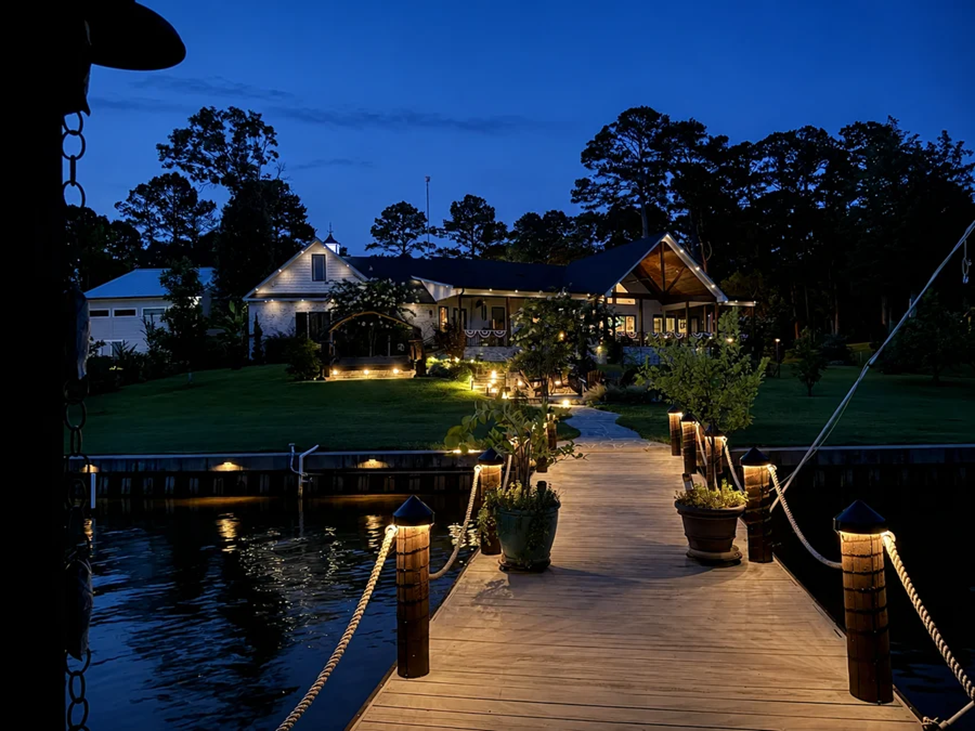
A dock needs to remain usable after sunset, and lighting has a direct effect on how safely people move across it. Wet boards, uneven surfaces, mooring lines, cleats, steps, and equipment can become difficult to see in low light. Good deck lighting provides enough illumination to identify these hazards without creating excessive glare across the surrounding water.
LED dock deck lighting is suited to this setting because it combines low energy use, long operating life, compact designs, and reliable performance. For private docks, marinas, waterfront properties, and commercial facilities, these qualities make LED fixtures a sensible lighting option.
Better Visibility on Walking Surfaces
The main purpose of dock deck lighting is to make walking areas easier to see. A well-positioned LED fixture can illuminate the surface around cleats, ladders, steps, access points, and seating areas.
This becomes particularly useful after rain or during periods of poor visibility. Water can make wooden or composite decking slippery, while ropes and other equipment may blend into a dark surface. Lighting helps users identify these obstacles before stepping over or around them.
Fixtures should be positioned carefully so they illuminate the deck rather than shining directly into someone’s eyes. Low-profile and downward-facing designs can provide useful light while keeping glare under control.
See also: The Changing Role of Social Media in Everyday Life
LED Fixtures Use Less Electricity
Docks may require lighting for several hours each evening, so energy consumption can add up over time. LED technology generally requires less electricity than older lighting technologies for a comparable level of illumination.
Lower power requirements can be particularly useful on docks that operate from limited electrical supplies. Some waterfront properties also use solar panels, batteries, or other independent power systems. Efficient lighting allows these systems to operate lighting for longer periods before requiring a recharge.
The savings depend on the fixture, operating schedule, power source, and installation, but reducing the amount of electricity needed for routine lighting can make ongoing dock operation easier to manage.
Long Service Life Reduces Maintenance
Replacing a light fixture on a dock is rarely as convenient as changing one inside a building. Access may require working over water, moving boats, disconnecting equipment, or arranging additional safety measures.
LED fixtures are known for their long operating lives compared with many traditional bulbs. Fewer replacements mean less routine maintenance and fewer occasions when someone has to access difficult areas of the dock.
For larger docks and marinas, this can be particularly useful. A number of fixtures may be installed along walkways, platforms, ramps, and boarding areas. Reducing the frequency of bulb replacement can save both time and maintenance effort.
Suitable for Wet Waterfront Conditions
Dock lighting has to deal with moisture, rain, spray, condensation, and changing outdoor temperatures. A fixture designed specifically for marine or outdoor use should have appropriate protection against these conditions.
The enclosure, seals, wiring, connectors, and mounting hardware all matter. An LED light may be energy efficient, but that alone does not make it suitable for a dock. Buyers should check the fixture’s weather-resistance rating and installation requirements before choosing a product.
Marine-grade materials can also help limit corrosion, particularly in locations exposed to saltwater. Stainless steel hardware, corrosion-resistant housings, and properly protected electrical connections can contribute to a longer-lasting installation.
Less Heat Around the Dock
Traditional lighting technologies can produce considerable heat during operation. LED fixtures generally produce less heat, which can be useful in compact outdoor installations.
A dock often has limited space around railings, seating, storage areas, and other equipment. Fixtures that remain relatively cool can reduce concerns associated with hot surfaces, although proper installation and manufacturer instructions should still be followed.
Lower heat output can also make certain recessed or compact lighting arrangements more practical, provided the chosen fixture is approved for that type of installation.
Compact Designs Fit Around Deck Hardware
Dock surfaces already contain plenty of hardware. Cleats, hinges, ladders, rails, bumpers, posts, and electrical equipment can make the available mounting space limited.
LED technology allows manufacturers to produce small fixtures in a variety of shapes. Some can be recessed into decking, while others can be mounted along edges, stairs, railings, or vertical surfaces.
A compact fixture can provide useful illumination without becoming a major obstruction. Recessed deck lights, for example, can sit close to the surface and reduce the chance of catching on footwear or equipment.
The right placement depends on the dock layout. Lighting should be planned around walking routes and working areas rather than simply installed at equal distances.
Controlled Lighting Can Reduce Glare
A dock should be visible without making the surrounding water excessively bright. Excessive glare can make it harder to see people, boats, or objects near the edge of the dock.
LED fixtures are available in different brightness levels, beam patterns, and color temperatures. This gives installers greater control over how light is distributed.
Warm or neutral white light may provide comfortable illumination for pedestrian areas, while brighter lighting may be appropriate around loading or working zones. The choice should reflect the dock’s purpose rather than relying on maximum brightness.
Shielding and downward-directed beams can also help keep light focused on the areas that need it.
Useful for Steps, Ladders, and Dock Edges
Some sections of a dock deserve more attention than others. Steps and ladders can become difficult to see after dark, particularly when they lead directly into the water.
Small LED fixtures can highlight changes in elevation and identify access points. Lighting along an edge can also make the boundaries of the walking area easier to recognize.
Careful placement matters because poorly positioned lights can create dark spots or reflections. A series of low-level fixtures may sometimes provide better visibility than one extremely bright light.
For docks used by several people, lighting should support natural movement from the shore to the end of the platform and toward boarding areas.
Works Well With Timers and Sensors
LED dock deck lighting can be paired with controls that reduce unnecessary operation. Timers can switch lights on during expected evening hours and turn them off later. Motion or occupancy sensors can provide lighting when activity is detected in selected areas.
These controls can reduce electricity consumption while maintaining visibility where it is needed.
Automation should not replace essential lighting in areas that need continuous illumination. A practical setup may combine regularly illuminated sections with sensor-controlled areas such as storage spaces or less frequently used walkways.
Choosing the Right LED Dock Lighting
The fixture itself should be selected according to the dock’s environment and purpose. Several details deserve attention before installation:
- Weather resistance: Check the manufacturer’s rating for outdoor or marine use.
- Corrosion resistance: Choose suitable materials for freshwater or saltwater exposure.
- Brightness: Avoid using more light than the area requires.
- Beam direction: Downward or shielded designs can reduce glare.
- Mounting method: Confirm that the fixture is suitable for the decking or structure.
- Electrical requirements: Verify voltage, wiring, connectors, and compatibility with the existing system.
- Color temperature: Select a light color that provides comfortable visibility.
- Maintenance access: Install fixtures where future inspection or replacement is practical.
Professional electrical installation may also be appropriate, particularly for docks exposed to water. Electrical systems near water require careful attention to grounding, protection, connections, and local regulations.
A Practical Fit for Private and Commercial Docks
LED dock deck lighting is not simply about making a waterfront area look attractive. Its practical value comes from providing controlled visibility with relatively low energy use and limited maintenance.
A private residential dock can benefit from illuminated steps, pathways, and boarding areas. A marina may use similar fixtures across larger walking surfaces, access points, and working areas. Commercial waterfront facilities may also require lighting that supports regular nighttime activity.
The most effective installation is one that matches the layout and use of the dock. Lighting should make important surfaces and access points easier to identify while avoiding unnecessary brightness.
For docks exposed to rain, spray, and prolonged outdoor use, selecting fixtures designed for the environment is just as important as choosing LED technology itself. With suitable equipment, careful positioning, and appropriate electrical installation, LED dock deck lighting can provide dependable illumination while keeping energy and maintenance demands manageable.