A men’s chain necklace can be subtle or highly noticeable depending on its length, thickness, material and link pattern. Choosing one is easier when these features are considered separately rather than treating every chain as the same type of accessory.
The right chain should sit comfortably around the neck, work with the clothing it is paired with and have enough strength for its intended use.
Common Chain Styles
Different link patterns create distinct looks.
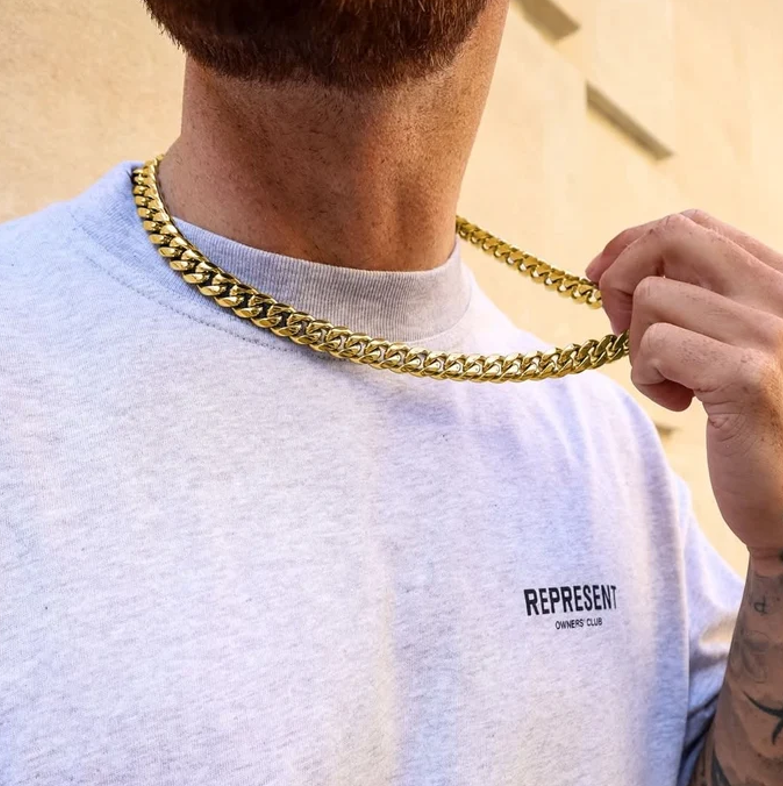
A curb chain has flattened links that sit closely together. Its shape gives it a strong appearance and makes it suitable for both casual and dressier outfits.
A Figaro chain uses a repeating pattern of longer and shorter links. The variation gives it more visual detail than a basic uniform chain.
A box chain consists of square-shaped links connected closely together. It has a clean appearance and can work well with pendants.
Rope chains feature links arranged to create a twisted appearance. They often reflect light strongly and can provide more visual detail.
Snake chains have smooth, closely connected surfaces rather than obvious individual links. Their clean appearance makes them useful for minimalist jewellery.
Choosing the Right Length
Chain length changes where the necklace sits and how visible it is. Shorter chains generally sit closer to the base of the neck. Medium lengths often fall around the upper chest and can work with open-collar shirts. Longer chains create more movement and can be worn over clothing.
Your usual wardrobe should guide the decision. A male chain necklace can be chosen based on the necklines and outfits you wear most often, helping you create a more balanced and comfortable look.
A chain worn with T-shirts can sit differently from one worn with a button-up shirt. Necklines also affect visibility. A chain that disappears under a high crew neck may be more visible with an open collar.
Thickness Changes the Look
Chain thickness should match the rest of your accessories and your preferred level of detail.
Thin chains tend to create a discreet appearance and can work well on their own or with a small pendant. Medium chains provide greater definition without necessarily becoming the main feature of an outfit.
Heavy chains are more noticeable and can create a stronger streetwear or statement appearance.
Thickness also affects weight. A larger chain may feel different around the neck, particularly during long periods of wear.
Gold, Silver and Other Materials
Material affects colour, durability, maintenance and price.
Gold is available in different purities, with alloys added to improve strength and alter colour. Yellow gold has a traditional warm appearance, while white and rose gold offer different finishes.
Silver has a cool, bright appearance and works well with a wide range of clothing. Sterling silver is commonly used in jewellery, although it can develop tarnish and may require polishing.
Stainless steel offers durability and generally requires less maintenance. It is also available in various finishes, including polished and darker surfaces.
Material should be selected according to how frequently the chain will be worn and the level of care you are prepared to provide.
Check the Clasp
The clasp should be suitable for the size and weight of the chain.
Lobster clasps are common and provide a secure closure for many styles. Spring-ring clasps are another option, particularly on lighter chains.
A heavier necklace needs a clasp and connecting rings that can withstand regular movement. Inspect the connection points rather than focusing only on the chain links.
Pendants Need the Right Chain
A pendant adds weight to a necklace, so the chain should be strong enough to support it.
The pendant’s bail also needs to fit over the chain. A thick chain may not pass through a small bail, while a very fine chain can look disproportionate beneath a large pendant.
Matching proportions usually creates a more balanced appearance.
Consider Skin Comfort
The chain sits directly against the neck, so material composition can matter for people with sensitive skin.
Check the product details for information about the metals and alloys used. If a necklace is plated, find out what material forms the base and what type of coating has been applied.
Comfort should also influence chain selection. Rough or poorly finished links can catch on skin or clothing.
Think About Your Existing Jewellery
A new chain does not need to stand alone.
Look at your watch, bracelets and rings before choosing a finish. Silver-toned jewellery can create a consistent cool-metal appearance, while gold pieces produce a warmer combination.
Mixed metals can also work, particularly when there is some visual connection between the pieces.
See also: What Should Businesses Expect From Professional Social Media Marketing Agencies?
Care for Your Chain Properly
Storage can prevent many avoidable problems.
Keep chains separated when possible because links can become tangled. Wipe away sweat and product residue after regular wear. Follow the material-specific cleaning instructions provided by the seller.
Avoid exposing delicate or plated chains to harsh chemicals unless the manufacturer confirms that they are safe.
A male chain necklace can be a long-term accessory when its style, length and material are selected according to actual wearing habits. Rather than choosing based only on appearance, consider how the chain will sit, what it will support and how often it will be worn.