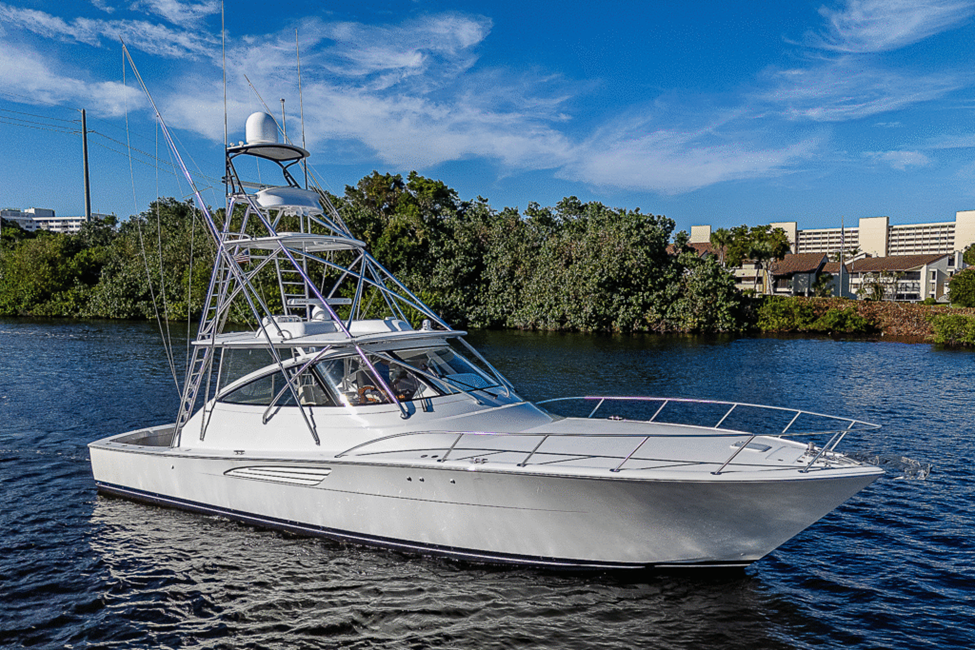
Buying a used convertible sportfish yacht involves more than finding a vessel with an attractive price and a long list of equipment. These boats are built for demanding offshore use, and years of fishing, cruising, docking, and exposure to saltwater can leave problems that are not obvious during a quick walkthrough.
A careful evaluation should cover the hull, engines, electrical systems, navigation equipment, fishing gear, interior, maintenance records, and previous ownership. A professional marine survey and mechanical inspection can then confirm what the initial inspection reveals.
Start With the Yacht’s History
Before inspecting the boat itself, collect as much information about its history as possible. Ask for maintenance invoices, engine service records, haul-out reports, survey documents, and records of major repairs. When researching Used Convertible Sportfish Yacht, this background information can help buyers understand the vessel’s overall condition and ownership history.
The age of the engines matters, but operating hours and maintenance history provide more useful context. A yacht with higher engine hours and consistent servicing may have fewer concerns than a lower-hour vessel that has received little attention.
Find out how the boat was used. A yacht regularly used for offshore tournaments may have experienced considerably more engine cycles, vibration, and saltwater exposure than one primarily used for occasional coastal cruising.
Previous damage should also be disclosed. Ask specifically about grounding, collision, storm damage, flooding, or major structural repairs. Insurance claims and repair invoices can provide useful evidence when available.
See also: The Changing Role of Social Media in Everyday Life
Inspect the Hull and Deck Carefully
The hull deserves close attention because structural repairs can become expensive quickly. Examine the hull for cracks, blisters, impact marks, uneven surfaces, and evidence of previous repairs.
Pay particular attention to areas around through-hulls, seacocks, struts, rudders, and trim tabs. These components operate in a harsh marine environment and should move freely without excessive corrosion or damage.
Walk across the deck and cockpit. Soft areas underfoot can indicate water intrusion or damaged core material. Check hatches, fish boxes, live wells, drains, cleats, rails, and other fittings for signs of leaks or deterioration.
Convertible sportfish yachts often have large cockpits designed around serious fishing activity. Inspect the condition of the fighting chair, bait systems, refrigeration, fish boxes, rod holders, outriggers, and related equipment. Replacement costs can add up if several pieces require attention.
Give the Engines Their Own Inspection
Engine condition should never be judged solely by appearance. A clean engine room does not necessarily mean the machinery has been properly maintained.
Record the make, model, age, horsepower, operating hours, and service history of each engine. Check for oil leaks, coolant residue, corrosion, damaged hoses, worn belts, and unusual odors.
A marine mechanic should conduct a separate mechanical inspection. Depending on the engine type and circumstances, this may include fluid analysis, computer diagnostics, compression testing, cooling-system checks, and examination of exhaust components.
Run the engines under load rather than relying only on a brief start-up. Watch for excessive smoke, unusual vibration, overheating, unstable temperatures, or abnormal sounds. Sea-trial performance can reveal issues that remain hidden while the yacht is tied to the dock.
Do not overlook the generator. A sportfish yacht may depend heavily on onboard power for refrigeration, air conditioning, electronics, pumps, and other equipment.
Test the Electrical and Navigation Systems
Modern sportfish yachts can contain a large amount of electrical equipment. Chartplotters, radar, sonar, autopilot systems, radios, satellite equipment, battery chargers, refrigeration, air conditioning, and lighting all require attention.
Turn equipment on individually and verify that it functions correctly. Screens should respond properly, pumps should operate without unusual noises, and electrical panels should show no obvious signs of overheating or corrosion.
Inspect battery banks, terminals, wiring, switches, breakers, and chargers. Poorly executed electrical modifications can create reliability and safety concerns, particularly on older boats that have accumulated equipment over several ownership periods.
Navigation electronics also deserve careful scrutiny. Determine the age of the major units and whether software or charts are still supported. Replacing an entire electronics package can become a substantial post-purchase expense.
Examine the Interior and Plumbing
The interior may not experience the same punishment as the cockpit, but it can reveal water intrusion and maintenance problems.
Look inside cabinets, beneath mattresses, around windows, near air-conditioning units, and below sinks. Check for staining, mildew, musty odors, swollen wood, or corrosion.
Test toilets, freshwater pumps, water heaters, showers, refrigeration, air conditioning, and other systems. Open and close doors, drawers, hatches, and windows to identify damaged hardware or alignment problems.
Moisture readings taken by a marine surveyor can be especially useful in areas where leaks are suspected. A small stain may represent an old, repaired leak, while persistent moisture can indicate an active problem.
Pay Attention to Fishing Equipment
Fishing equipment is one of the reasons buyers choose convertible sportfish yachts, but much of it is exposed to saltwater and heavy use.
Inspect outriggers, teaser reels, electric reels, live-bait systems, tuna towers, fighting chairs, rod holders, and cockpit plumbing. Check whether pumps maintain proper water flow and whether drains clear quickly.
Inspect the tower and its mounting points closely. Excessive movement, corrosion, damaged fasteners, or cracking around mounting areas should receive professional attention.
Also examine the cockpit’s nonskid surfaces and drainage. Water should move efficiently through the deck drains rather than collecting around equipment or fittings.
Review the Running Gear
A haul-out inspection provides access to components that cannot be properly examined in the water.
Inspect the propellers for dents, cracks, or repairs. Check shafts, shaft seals, struts, rudders, and bearings for wear and alignment concerns. Look at the bottom paint and underwater fittings for corrosion or other damage.
The surveyor should also examine the condition of through-hulls and seacocks. Components that appear heavily corroded or difficult to operate may need replacement.
If the yacht has pods, surface drives, or another specialized propulsion arrangement, use a technician familiar with that particular system.
Conduct a Proper Sea Trial
A sea trial should simulate the type of operation you expect from the yacht. Check acceleration, cruising performance, steering response, engine temperatures, oil pressure, fuel consumption, vibration, and handling at different speeds.
Test the yacht at idle, cruising speed, and higher operating speeds where conditions allow. Listen carefully for changes in engine or drivetrain noise.
Test the electronics while underway and operate the autopilot, trim systems, pumps, and other equipment that can safely be checked at sea.
The sea trial should also provide an opportunity to compare actual performance with the manufacturer’s specifications and the seller’s claims.
Hire Independent Professionals
A marine survey is one of the most useful steps in evaluating a used yacht. Choose an independent surveyor rather than relying solely on a report commissioned for an earlier transaction.
For larger convertible sportfish yachts, separate specialists may be appropriate for the hull and machinery. A diesel technician can provide a detailed assessment of the engines and generator, while the surveyor examines the vessel’s overall condition.
Ask for written findings and estimated areas of concern. A survey is not simply about identifying defects. It provides information that can help you understand upcoming maintenance requirements and ownership costs.
Calculate the Cost Beyond the Purchase Price
The purchase price represents only part of the financial commitment. Insurance, dockage, fuel, maintenance, storage, haul-outs, electronics, crew, and repairs can all affect the cost of ownership.
Create a list of immediate repairs and another for maintenance that may be required within the next one to three years. Include engine services, bottom work, batteries, electronics, safety equipment, canvas, and fishing gear.
This exercise can make two similarly priced yachts look very different financially without relying on assumptions about their appearance or age.
A used convertible sportfish yacht should be purchased based on verified condition rather than presentation alone. Reviewing its history, inspecting every major system, completing a mechanical assessment, and conducting a proper sea trial can expose problems before they become ownership surprises. The goal is not simply to find a boat that looks ready for the next trip, but to understand exactly what you are buying and what it will require to remain reliable offshore.