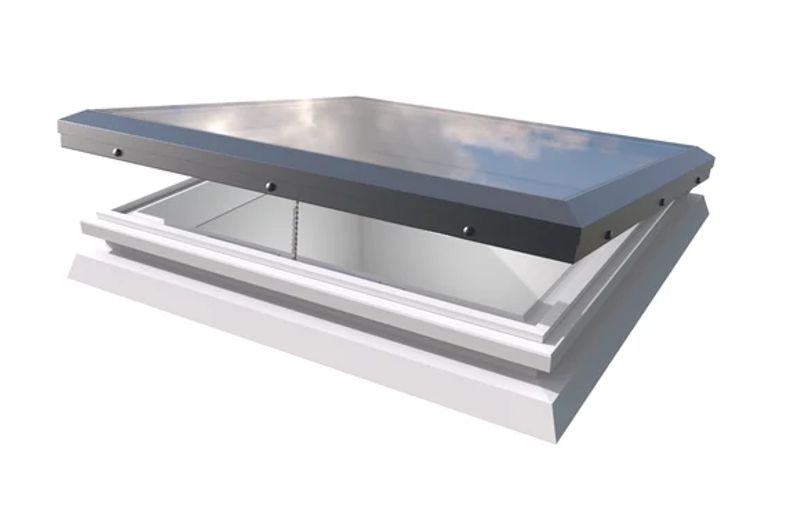
Electric opening roof lights combine overhead daylight with powered ventilation. Instead of manually reaching a handle or using a pole, the roof light can be opened and closed through an electric control system.
This type of roof glazing can be useful in extensions, kitchens, living areas, commercial spaces, and rooms where the roof opening is positioned beyond comfortable reach. The technology varies between products, so choosing a suitable model requires more than checking whether it opens electrically.
Frame construction, glazing, controls, weather protection, ventilation, safety features, and maintenance should all be considered before installation. For homeowners seeking convenient ventilation control, electric opening roof lights can provide an easy way to operate the roof opening when needed.
Motor Type and Opening Mechanism
The motor is central to an electric roof light, so its design deserves attention.
Different systems may use chain, spindle, actuator, or other mechanisms to move the roof light. The available opening angle can also vary. Some products provide a modest ventilation opening, while others are designed for a wider aperture.
The intended use should guide the choice. A roof light primarily used for occasional ventilation may not require the same opening range as one expected to provide regular airflow.
The motor should also be suitable for the weight and dimensions of the glazing unit. Manufacturers normally specify operating limits that should not be exceeded.
Control Options
Electric roof lights can use several types of controls. Wall switches provide a familiar option, while remote controls allow operation from elsewhere in the room.
Some systems can also connect to smart-home controls, sensors, or automated ventilation systems. The usefulness of these features depends on how the room is used.
For a simple extension, a basic wall control may be sufficient. A larger property with several roof lights may benefit from grouped controls that allow multiple units to be operated together.
The control system should be easy for all household members to understand and use.
Rain Sensors
A rain sensor can provide an additional level of convenience and protection.
If a roof light has been left open and rain begins, the sensor can detect moisture and trigger the closing mechanism on compatible systems. This can be particularly useful when roof windows are used for daytime ventilation and the occupants are away from the room.
Sensor performance varies between products, so the manufacturer’s specifications should be checked carefully. A sensor should be viewed as an additional feature rather than a substitute for sensible use and regular maintenance.
Temperature and Ventilation Sensors
Some electric opening roof lights can work with temperature sensors or automated ventilation controls.
A temperature sensor can trigger opening when indoor conditions reach a particular level and close the window when temperatures fall. The exact functionality depends on the control system.
This can be useful in rooms that become warm during sunny periods. Kitchens, conservatories, and glazed extensions may experience higher internal temperatures than other parts of a property.
Automatic ventilation should still be designed around the room’s wider ventilation requirements.
Glazing Performance
The opening mechanism is only one part of the roof light. The glazing specification has a major effect on comfort.
Look at thermal performance, light transmission, solar control, acoustic properties, and safety characteristics. A roof light with high daylight transmission may be suitable for a darker room, while solar-control glazing may be preferable where direct sunlight creates excessive heat.
The ideal specification depends on orientation, room size, roof position, climate, and intended use.
Double or triple glazing may be available on some systems, although the exact options depend on the product.
Thermal Insulation
A roof opening creates a junction within the building envelope, so insulation needs careful attention.
Poorly insulated frames or badly detailed roof openings can create cold spots and condensation problems. The roof light should therefore be compatible with the insulation standards required for the building.
The frame, glazing, surrounding roof structure, and installation detail all contribute to thermal performance.
A high-performing roof light can still perform poorly if the surrounding opening is inadequately insulated or sealed.
Safety Features
Powered roof lights should include suitable safety measures.
For example, anti-trap protection can help prevent injury if an object or person is caught during closing. Some systems may also include obstacle detection or controlled closing speeds.
Safety features become particularly relevant in family homes, schools, offices, and other buildings where children or members of the public may be nearby.
The manufacturer’s safety information should be reviewed before purchase, particularly where the roof light will be installed at a low or easily accessible height.
Emergency and Manual Operation
Consider what happens if the electrical supply fails.
Some electric roof lights include a manual override or alternative opening method. This can be useful during power cuts or system faults.
The location of the manual override matters too. If the roof light is installed high above the floor, a difficult-to-reach override may provide limited practical value.
A clear maintenance plan should include periodic checks of the motor and control system.
See also: What Should Businesses Expect From Professional Social Media Marketing Agencies?
Weather Resistance
Roof lights have to cope with rain, wind, temperature changes, and outdoor debris.
The frame and flashing system should be designed for the specific roof construction. Water drainage around the opening is particularly important.
A poorly detailed roof junction can allow water to enter even if the roof light itself is well manufactured.
The product should therefore be compatible with the roof covering and pitch. Installation instructions should be followed carefully rather than adapting components without approval.
Maintenance Requirements
Electric systems contain moving parts that require periodic inspection.
The motor, hinges, seals, controls, and sensors should be checked according to the manufacturer’s recommendations. External glazing should also be cleaned so that daylight transmission remains effective.
If a rain or temperature sensor is installed, it should be tested periodically to ensure it continues to respond correctly.
Any unusual noise, slow movement, intermittent operation, or failure to close should be investigated rather than ignored.
Choosing a System for Everyday Use
An electric roof light should be selected around the way the room will actually be used.
A simple manually controlled motor may suit one household, while another may benefit from remote controls, rain sensors, temperature monitoring, and automated operation.
The size of the roof opening, glazing specification, thermal performance, frame construction, safety features, and installation method are equally relevant.
Electric operation adds convenience, but the roof light still needs to function as a properly insulated and weather-resistant part of the roof.
Making the Selection
A well-specified electric opening roof light can provide daylight and controllable ventilation while making roof-level glazing easier to operate.
Before purchasing, check the motor type, opening angle, controls, sensors, glazing, thermal properties, safety features, manual override, and maintenance requirements. The roof structure and installation details should also be assessed by a suitable professional.
Taking these factors into account helps ensure the finished roof light suits both the building and the habits of the people using it.