Commercial floors need to handle regular foot traffic, cleaning, equipment movement and day-to-day use without becoming difficult to maintain. The flooring system also needs to suit the appearance and practical requirements of the space. Commercial epoxy flake flooring combines a resin-based coating system with decorative flakes and a protective finishing layer to create a continuous surface for a range of commercial environments.
The finished floor can provide a hard-wearing surface with a textured appearance and flexible design options. Its suitability depends on factors such as the condition of the concrete slab, expected traffic, cleaning routines, moisture conditions and required slip resistance.
For businesses considering a coated concrete floor, commercial epoxy flake flooring can be considered as part of a commercial flooring plan where the substrate and operating conditions are appropriate.
What Is Commercial Epoxy Flake Flooring?
Epoxy flake flooring is a multi-layer flooring system rather than a single coating. It is generally installed over a prepared concrete substrate, with resin-based coating layers combined with decorative flakes and a final protective coat.
The exact system can vary according to the floor, intended use and required finish. Proper preparation is also essential because the coating needs a suitable surface to bond with.
How an epoxy flake system is constructed
A typical flake flooring system begins with preparation of the existing concrete. Once the substrate has been cleaned and mechanically prepared, the base coating can be applied. Decorative flakes are then distributed across the wet coating before a suitable topcoat is installed.
Each layer has a particular purpose. The base layer provides the foundation for the system, the flakes contribute to the visual finish and surface character, while the final coating helps protect the completed floor.
What decorative flakes contribute to the surface
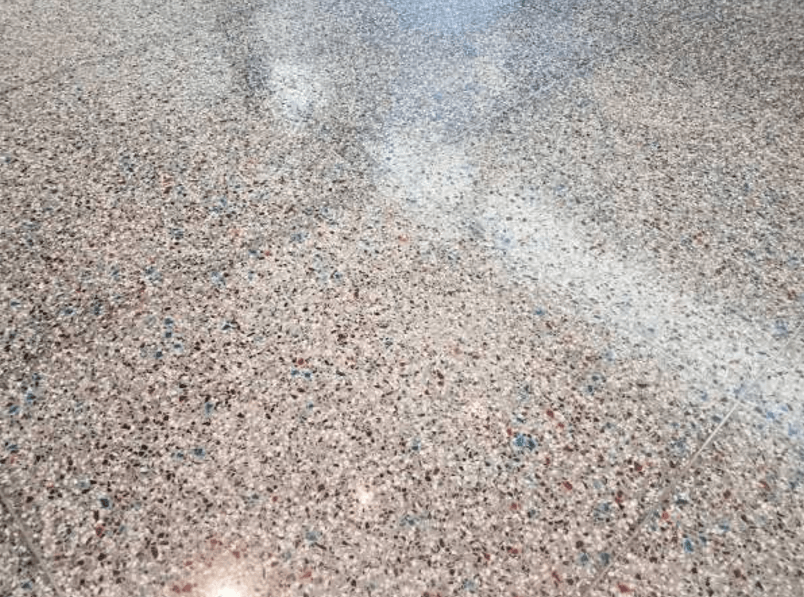
Flakes are available in different colours, sizes and combinations. They create a speckled appearance across the floor and can help produce a more decorative finish than a single-colour epoxy coating.
The distribution of flakes can also influence the visual consistency of the finished surface. Selection should take account of the building’s design requirements and the level of texture required.
How the finished floor differs from plain epoxy
Plain epoxy can provide a continuous coated surface with a more uniform appearance. Epoxy flake flooring introduces decorative material into the system, giving the finished floor greater visual variation.
The flake layer can also contribute to surface texture, depending on the system and topcoat used. This makes the flooring suitable for commercial spaces where both appearance and practical floor performance need to be considered.
Why Is Epoxy Flake Flooring Used in Commercial Spaces?
Commercial flooring is exposed to different forms of daily wear. A suitable coating system can provide a finished surface that is easier to maintain while also giving the area a defined appearance.
Durability under regular traffic
Epoxy coatings are designed to form a hard surface over prepared concrete. This can make epoxy flooring suitable for areas exposed to regular pedestrian traffic and other routine commercial activity.
The expected level of traffic still needs to be considered before installation. Areas subject to heavy equipment, impact or specific industrial conditions may require a flooring system selected for those particular demands.
Ease of cleaning
A continuous coated surface can make routine cleaning more straightforward because there are fewer joints and surface irregularities than some conventional flooring materials.
Regular maintenance should follow the requirements of the installed coating system. Cleaning methods, detergents and equipment should be selected so they do not unnecessarily damage the coating or reduce its service performance.
Surface texture and slip considerations
The texture of an epoxy flake floor can vary according to the flake broadcast, aggregate and finishing system. This can be relevant in areas where slip resistance is part of the flooring specification.
Slip resistance should not be assumed simply because a floor contains decorative flakes. The intended use, footwear, contaminants, cleaning conditions and applicable requirements should be assessed when selecting the system.
Decorative flexibility
Flake systems provide design flexibility through combinations of colours and flake patterns. This allows a commercial floor to have a more decorative appearance while retaining the characteristics of a resin-based coating.
Colour selection can also influence how visible everyday dirt and marks are between cleaning cycles, which may be relevant to facilities with frequent use.
Where Can Commercial Epoxy Flake Flooring Be Used?
The system can be considered for different commercial environments where a continuous coated floor is appropriate. The specific suitability depends on the substrate and operational conditions.
Retail spaces
Retail areas require flooring that can cope with regular pedestrian movement while fitting the appearance of the premises. Epoxy flake flooring can provide a decorative surface with a consistent finish across suitable concrete substrates.
Offices and commercial facilities
Commercial offices, work areas and shared facilities may benefit from flooring that is straightforward to clean and visually adaptable. The coating can be specified according to the expected level of traffic and maintenance requirements.
Childcare and community environments
Childcare and community facilities have particular cleaning and safety considerations. Floor selection should account for hygiene routines, slip requirements, traffic and the condition of the existing substrate.
The appropriate coating and surface texture should be determined before installation rather than relying solely on the decorative appearance of the flakes.
Workshops and service areas
Workshops and service areas may experience greater exposure to dirt, equipment movement and spills. Epoxy systems can be considered where the substrate and operating conditions are suitable for a coated surface.
The coating specification should reflect the type and frequency of use within the space.
Other high-use commercial spaces
Epoxy flake flooring may also be considered for corridors, utility areas, commercial facilities and other spaces where a continuous coated floor is appropriate.
The floor should be assessed according to traffic levels, moisture exposure, cleaning requirements and the type of activities carried out on the surface.
How Is Epoxy Flake Flooring Installed?
Installation involves several stages, and the quality of each stage can affect the completed floor. The process should begin with an assessment of the existing concrete rather than immediate coating application.
Assessing the concrete substrate
The concrete needs to be checked for cracks, damage, contamination, moisture concerns and other conditions that could affect the coating system.
The age and condition of the slab can also influence the preparation and repair work required before coating.
Cleaning and surface preparation
Concrete preparation removes contaminants and creates a suitable surface for coating adhesion. Mechanical preparation may be used to remove weak surface material and prepare the concrete.
Dust, grease, coatings and other contaminants need to be addressed as part of the preparation process.
Applying the epoxy system
Once the substrate has been prepared, the selected base coating can be applied according to the specified system. Coverage and application methods need to be controlled to achieve a consistent surface.
The coating system should be selected according to the floor’s intended use rather than appearance alone.
Broadcasting the flakes
Decorative flakes are distributed over the wet coating. Their placement affects the appearance and surface texture of the finished floor.
The selected flake combination should suit the desired appearance and practical requirements of the space.
Applying the finishing coat
A protective topcoat is applied over the completed flake layer. This helps encapsulate the flakes and forms the final wearing surface.
The choice of topcoat can influence characteristics such as texture, appearance and maintenance requirements.
Allowing the floor to cure
The flooring system needs sufficient curing time before normal use. Access requirements should therefore be planned around the manufacturer’s or contractor’s specified curing conditions.
Premature traffic can interfere with the performance of a newly installed coating.
What Makes the Concrete Substrate Important?
Epoxy flooring relies on the concrete beneath it. A coating does not automatically correct significant substrate problems, so preparation and assessment form an important part of the installation.
Existing cracks and surface defects
Cracks, spalling, uneven areas and other defects may need to be repaired or addressed before coating. The appropriate treatment depends on the type and severity of the defect.
Moisture considerations
Moisture within or beneath a concrete slab can affect some coating systems. The floor should therefore be assessed for moisture conditions before installation.
Surface contamination
Oil, grease, dirt, previous coatings and other contaminants can interfere with adhesion. These materials need to be identified and removed through suitable preparation methods.
Mechanical preparation
Mechanical preparation can help create the surface profile required for coating adhesion. The method used depends on the existing concrete and the coating specification.
Why preparation affects long-term performance
Poor preparation can create problems such as weak adhesion, premature coating failure or uneven appearance. Proper preparation gives the coating system a suitable foundation and helps the finished floor perform as intended.
How Does Epoxy Flake Flooring Compare With Other Concrete Finishes?
Different flooring systems provide different surface characteristics. The right option depends on the existing slab, appearance requirements, traffic, maintenance and operational conditions.
Epoxy flake vs polished concrete
Polished concrete is mechanically ground and refined to produce a finished concrete surface. Epoxy flake flooring instead places a resin-based coating system over prepared concrete and incorporates decorative flakes.
Polished concrete retains the visual character of the concrete itself, while epoxy flake systems offer greater control over the decorative coating appearance.
Epoxy flake vs honed concrete
Honed concrete is mechanically ground to expose and refine the concrete surface before sealing. Aggregate exposure can range from minimal to more pronounced depending on the grinding depth.
Epoxy flake flooring creates a coated surface with decorative flakes rather than relying on aggregate exposure from the concrete slab.
Epoxy flake vs plain epoxy coating
Both systems use resin-based coatings, but flake flooring includes decorative flakes within the system. Plain epoxy generally has a more uniform appearance.
The choice can depend on the desired visual finish, texture and practical requirements of the property.
Selecting according to the building’s requirements
Flooring should be selected based on the actual conditions of the building. Traffic, moisture, cleaning practices, appearance, substrate condition and slip requirements all influence the appropriate system.
What Maintenance Does an Epoxy Flake Floor Need?
An epoxy flake floor still requires regular maintenance even though its surface is designed for commercial use. Cleaning practices should match the installed system and the conditions of the facility.
Routine cleaning
Routine sweeping or dust removal can prevent loose dirt from accumulating. Damp cleaning can then be carried out using products suitable for the coating.
Dealing with spills
Spills should be addressed according to the nature of the substance and the coating manufacturer’s cleaning recommendations. Prompt cleaning can help reduce the chance of staining or prolonged exposure.
Avoiding unsuitable cleaning methods
Highly aggressive chemicals, abrasive methods or unsuitable equipment may affect the coating. Cleaning products should therefore be selected for compatibility with the installed floor.
Monitoring wear in high-traffic areas
High-use sections should be inspected periodically for visible wear, damage or changes in the coating. Maintenance requirements can vary according to traffic and operating conditions.
What Should Businesses Ask Before Installing Epoxy Flake Flooring?
A commercial flooring decision should cover more than colour and appearance. Asking the right technical questions helps establish whether the proposed system matches the building.
Is the existing slab suitable?
The contractor should assess the concrete for damage, contamination, moisture and surface condition before recommending a coating.
What level of slip resistance is required?
The required level of slip resistance should be established according to how the floor will be used and the conditions it may encounter.
What preparation will be performed?
Ask how the concrete will be cleaned, mechanically prepared and repaired before coating. Preparation is a fundamental part of the flooring system.
Which coating system is appropriate?
The coating and finishing layers should be selected according to traffic, exposure, maintenance and appearance requirements.
What maintenance will be required?
Businesses should understand the recommended cleaning methods and any ongoing maintenance requirements before installation.
See also: What Should a Senior Bathroom Remodel Include for Safer Aging in Place?
FAQs About Commercial Epoxy Flake Flooring
What is epoxy flake flooring?
Epoxy flake flooring is a multi-layer resin-based flooring system installed over prepared concrete. Decorative flakes are broadcast into the coating before a finishing coat is applied.
Is epoxy flake flooring suitable for commercial buildings?
It can be suitable for various commercial environments, including retail, offices, community facilities, workshops and other high-use areas. Suitability depends on the concrete substrate, traffic, moisture, cleaning and performance requirements.
Is epoxy flake flooring slip resistant?
The level of slip resistance depends on the flooring specification, surface texture and finishing system. Slip requirements should be assessed according to the intended use rather than assumed from the presence of decorative flakes.
How long does commercial epoxy flake flooring last?
Service life varies according to substrate condition, installation quality, traffic, cleaning practices, environmental exposure and the selected coating system. A suitable assessment is needed to establish realistic expectations for a particular floor.
How do you clean an epoxy flake floor?
Routine cleaning generally involves removing loose dirt followed by damp cleaning with products compatible with the installed coating. The recommended cleaning procedure should be followed for the specific flooring system.
Planning a Commercial Epoxy Flake Flooring System
A commercial epoxy flake floor should be planned around the building’s actual requirements. Appearance is only one part of the decision. The condition of the concrete, preparation requirements, expected traffic, moisture conditions, cleaning practices and slip considerations all influence the suitability of the system.
Allure Concrete Solutions provides concrete flooring and coating services for commercial applications, with flooring options selected according to the characteristics and requirements of the project. More information about available concrete flooring and coating services can be found at Allure Concrete Solutions.
A properly assessed substrate and correctly specified coating system can provide a practical foundation for commercial flooring. Before work begins, businesses should confirm the preparation process, coating specification, expected curing period and ongoing maintenance requirements.
For project requirements or to discuss the suitability of a commercial epoxy flake flooring system, Contact the flooring team to arrange further information.