Cooling a marriage hall during summer events requires more than simply adding a cooling unit to the space. Large halls often have high ceilings, wide floor areas, many occupants, lighting, catering activity and frequent door movement. These conditions can increase the amount of heat inside the venue and make air distribution an important part of the cooling plan.
For venues considering evaporative cooling, a suitable cooler for marriage hall should be selected according to the hall’s size, occupancy, airflow requirements, ventilation conditions and layout.
Why Is Cooling a Marriage Hall Different From Cooling a Regular Room?
A marriage hall can have several hundred occupants, depending on its size and permitted capacity. The cooling arrangement therefore needs to move and distribute a substantial volume of air rather than simply lowering the temperature in one enclosed area.
Large Floor Area
Marriage halls generally cover much larger areas than standard rooms. A single cooling unit may not provide sufficient air movement across the entire space. The placement and capacity of cooling equipment should therefore be considered according to the hall’s dimensions.
High Occupancy
People contribute heat to an occupied indoor environment. During weddings and other events, the number of people can remain high for several hours, increasing the demand for continuous airflow.
Heat Generated by People and Lighting
Lighting, sound equipment, kitchen activity and other electrical equipment can add to the heat load. The cooling arrangement needs to account for these sources when determining the required airflow and cooling capacity.
Multiple Seating and Activity Zones
A marriage hall may include seating areas, dining sections, stages, entrances and service areas. Each zone can have different airflow requirements. A cooling arrangement should distribute air according to the layout instead of concentrating it in only one location.
Need for Continuous Air Movement
Good air movement is particularly relevant in crowded halls. Cooling equipment should be capable of delivering air consistently throughout the event while working with the hall’s ventilation arrangements.
What Should a Marriage Hall Cooling System Provide?
A suitable cooling system should address both cooling performance and air distribution. These factors become especially relevant when the venue has a large open floor area.
Sufficient Airflow
Airflow capacity should match the size and occupancy of the hall. Industrial evaporative coolers are available in different capacities, allowing the cooling arrangement to be selected according to the space and required air movement.
Even Air Distribution
Cooling one section while leaving other areas warm can reduce overall comfort. Air should be distributed across occupied areas using suitable equipment placement or ductwork.
Fresh Air Supply
Evaporative cooling systems can introduce fresh air into the space rather than relying only on recirculated indoor air. Proper exhaust and ventilation arrangements can also help remove stale air, heat and odours.
Comfortable Air Movement
The objective is not simply to produce cool air. Air should move effectively through occupied areas without creating an unsuitable airflow pattern around seating, dining or stage areas.
Practical Operation During Long Events
Marriage functions can continue for several hours. The cooling system should therefore be suitable for extended operation, with accessible controls and maintenance requirements that venue operators can manage. Visit here to know more: ARCTIC
Is a Ducted Evaporative Cooler Suitable for a Marriage Hall?
A ducted evaporative cooler can be considered when a marriage hall requires organised air distribution across a large area. The ducted range from ARCTIC is designed for applications including banquet halls and marriage halls, with air distributed through ducts and multiple grilles.
Centralised Cooling
A ducted arrangement allows the cooling equipment to serve a larger area from a planned installation. This can be useful where the hall requires a coordinated cooling system rather than several independently positioned units.
Distribution Through Multiple Grilles
Ductwork can distribute cooled air to different sections of the hall. Multiple grilles allow airflow to be positioned according to the room layout and occupied areas.
Coverage of Large Open Areas
Large halls may require substantial airflow. The ducted evaporative cooler range listed by ARCTIC includes models with airflow capacities ranging from 8,000 CMH to 120,000 CMH, providing different options for larger commercial spaces.
Managing Different Sections of the Hall
Duct outlets can be planned around seating areas, stages, dining spaces and other sections. The exact arrangement depends on the hall’s structure and ventilation requirements.
Importance of Duct Planning
Duct size, outlet locations, static pressure and blower capacity should be considered before installation. Poorly planned distribution can affect how effectively cooled air reaches occupied areas.
When Can Portable Coolers Be Useful in a Marriage Hall?
Portable evaporative coolers can provide another approach where permanent ducting is not practical or where additional cooling is required in selected areas.
Areas With Installation Constraints
Some venues may not have suitable provisions for installing ductwork. Portable units can provide cooling without requiring a complete fixed air distribution network.
Targeted Cooling
A portable cooler can be positioned near an area requiring additional airflow. This can be useful for specific sections where heat accumulation is greater.
Temporary Cooling Requirements
Portable equipment can be considered where cooling requirements change according to the event, venue arrangement or seasonal use.
Moving Cooling Between Areas
Portable units can be repositioned when the arrangement of the venue changes. This provides flexibility that is not available with permanently fixed outlets.
Supporting Existing Cooling Systems
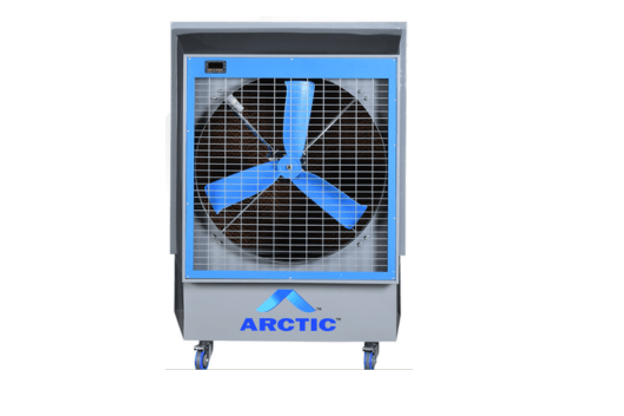
Portable coolers can also provide additional airflow in areas that remain warmer than the rest of the hall. The free-flow range includes applications such as banquets and marriage halls.
What Factors Should Venue Owners Consider Before Choosing a Cooler?
The cooling requirement should be determined from the actual characteristics of the venue rather than floor area alone.
Hall Size and Ceiling Height
Floor area provides an initial indication of the required cooling capacity, while ceiling height affects the total volume of air within the hall.
Expected Occupancy
The expected number of guests affects the internal heat load and airflow requirements. Event capacity should therefore form part of the cooling assessment.
Number of Cooling Zones
A single open hall may still contain several areas with different requirements. Identifying these zones can help determine whether portable units, ducted distribution or a combination of arrangements is appropriate.
Door and Ventilation Conditions
Frequently opened doors can allow warm outdoor air to enter. Ventilation and exhaust conditions should also be considered when planning an evaporative cooling system.
Heat-Generating Equipment
Lighting, sound systems, catering equipment and other electrical appliances can contribute to indoor heat. These loads should be considered during system selection.
Required Airflow
Airflow is a major consideration for large halls. The selected equipment should provide sufficient air volume and distribution for the intended space.
Ducted or Portable: Which Cooling Arrangement Fits the Hall?
Both arrangements can serve different venue requirements. The choice depends on the building, installation conditions and desired flexibility.
Permanent Venue Installations
A ducted system may suit venues that require a fixed cooling arrangement with planned air distribution throughout the hall.
Flexible Cooling Requirements
Portable coolers can be useful where equipment needs to be moved or where cooling requirements change between different events.
Large Central Areas
For a large hall requiring coordinated air delivery, ducted cooling can provide distribution through multiple grilles.
Specific Hot Spots
Portable units can provide additional airflow in selected locations where localised cooling is required.
Installation and Maintenance Considerations
Ducted systems require planning for ducts, grilles and installation space. Portable equipment generally requires less fixed infrastructure but still needs regular cleaning, water system maintenance and airflow component inspection.
How Can Cooling Affect Guest Comfort During Events?
Cooling has a direct relationship with air movement in a crowded venue. A suitable system can help manage heat generated by occupants and equipment while maintaining airflow across occupied areas.
Managing Heat From Large Crowds
High occupancy increases the amount of heat produced within the hall. Adequate airflow helps move air through crowded areas.
Maintaining Air Movement
Continuous air movement can reduce stagnant conditions and support a more comfortable environment during extended events.
Reducing Stale Indoor Air
Evaporative cooling works with fresh-air intake and ventilation. Appropriate exhaust arrangements can assist with the removal of stale air, heat and odours.
Supporting Comfortable Seating Areas
Cooling outlets should be planned around occupied sections so that air reaches areas where guests spend most of their time.
Keeping Service Areas Cooler
Dining and catering areas may experience additional heat from food preparation and equipment. These areas may require separate airflow consideration.
What Maintenance Should a Marriage Hall Cooling System Receive?
Regular maintenance helps keep cooling equipment operating properly throughout the season.
Cooling Pad Inspection
Cooling pads should be inspected for dirt, scaling, damage and water distribution problems. Their condition affects the contact between incoming air and water.
Fan and Blower Checks
Fans and blowers should be inspected to ensure that airflow remains consistent. Unusual noise, vibration or reduced air delivery should be investigated.
Water System Maintenance
Water tanks, pumps, pipes and distribution components should be cleaned and checked regularly. Water quality and cleanliness can affect system operation.
Cleaning Airflow Components
Grilles, filters where provided, air passages and other accessible components should be kept clean to prevent unnecessary airflow restrictions.
Pre-Season System Inspection
Before the summer event season begins, the complete cooling system should be checked. Early inspection can identify maintenance requirements before the equipment is needed for long operating periods.
Frequently Asked Questions
1. What type of cooler is suitable for a marriage hall?
The suitable type depends on hall size, occupancy, ceiling height, ventilation and airflow requirements. Ducted evaporative coolers can suit large halls requiring distributed airflow, while portable coolers can provide flexible or targeted cooling.
2. Are evaporative coolers suitable for banquet halls?
Yes. Evaporative cooling can be used for large commercial spaces when the ventilation and operating conditions are suitable. The equipment should be selected according to the hall’s airflow, cooling and fresh-air requirements.
3. Is a ducted cooler better for a large marriage hall?
A ducted cooler can be appropriate for a large marriage hall where cooled air needs to be distributed through multiple grilles. The suitability depends on the hall layout, available installation space, required airflow and duct design.
4. Can portable coolers be used in a wedding venue?
Yes. Portable evaporative coolers can be used for targeted cooling, temporary requirements or areas where fixed ducting is difficult to install. Their portability also allows cooling equipment to be repositioned when required.
5. How do I calculate cooling requirements for a marriage hall?
Start with the hall’s floor area, ceiling height, occupancy, ventilation conditions and internal heat sources. Airflow capacity should then be assessed according to the total space and cooling zones. For a large venue, professional application planning can help determine equipment capacity and distribution.
See also: How Do You Extend a T Top Sun Shade Over the Bow of a Center Console?
Planning Cooling for a Marriage Hall
A marriage hall requires a cooling arrangement that accounts for more than temperature alone. Airflow, fresh-air supply, occupancy, ventilation, heat sources and distribution across different sections all influence the selection process.
Ducted evaporative cooling can provide planned air distribution for large halls, while portable units can offer flexibility where targeted or temporary cooling is required. The appropriate arrangement should be selected after assessing the venue’s physical layout and operating conditions.
For assistance with a commercial cooling requirement, visit the Contact page to discuss the application and equipment requirements.