A steam shower needs a different type of enclosure from a standard shower. The door is not simply there to keep water inside the bathing area. It also forms part of the enclosure that helps contain steam, so its size, fit, seals, glass, and surrounding construction all matter.
At the same time, a steam shower does not have to look purely functional. Modern glass options and hardware finishes allow homeowners and designers to create an enclosure that fits the style of the bathroom.
Choosing the right shower door for a steam shower therefore means balancing enclosure performance with appearance.
Why Steam Showers Need a Properly Enclosed Door
Steam is produced inside a relatively confined space and needs to remain in that area long enough for the system to work as intended.
A conventional shower door may not provide the same level of enclosure needed for steam. Gaps around the door, an open space above the enclosure, or poorly fitted seals can allow steam to escape quickly.
A steam shower enclosure generally needs to be designed with containment in mind. The door should fit accurately within the opening, and the surrounding enclosure should be constructed to minimise unnecessary gaps.
The exact requirements depend on the steam system and enclosure design, so manufacturer specifications should be checked before selecting the door.
Glass Is Both Functional and Decorative
Glass is one of the most visible parts of a shower enclosure, making it an important design choice.
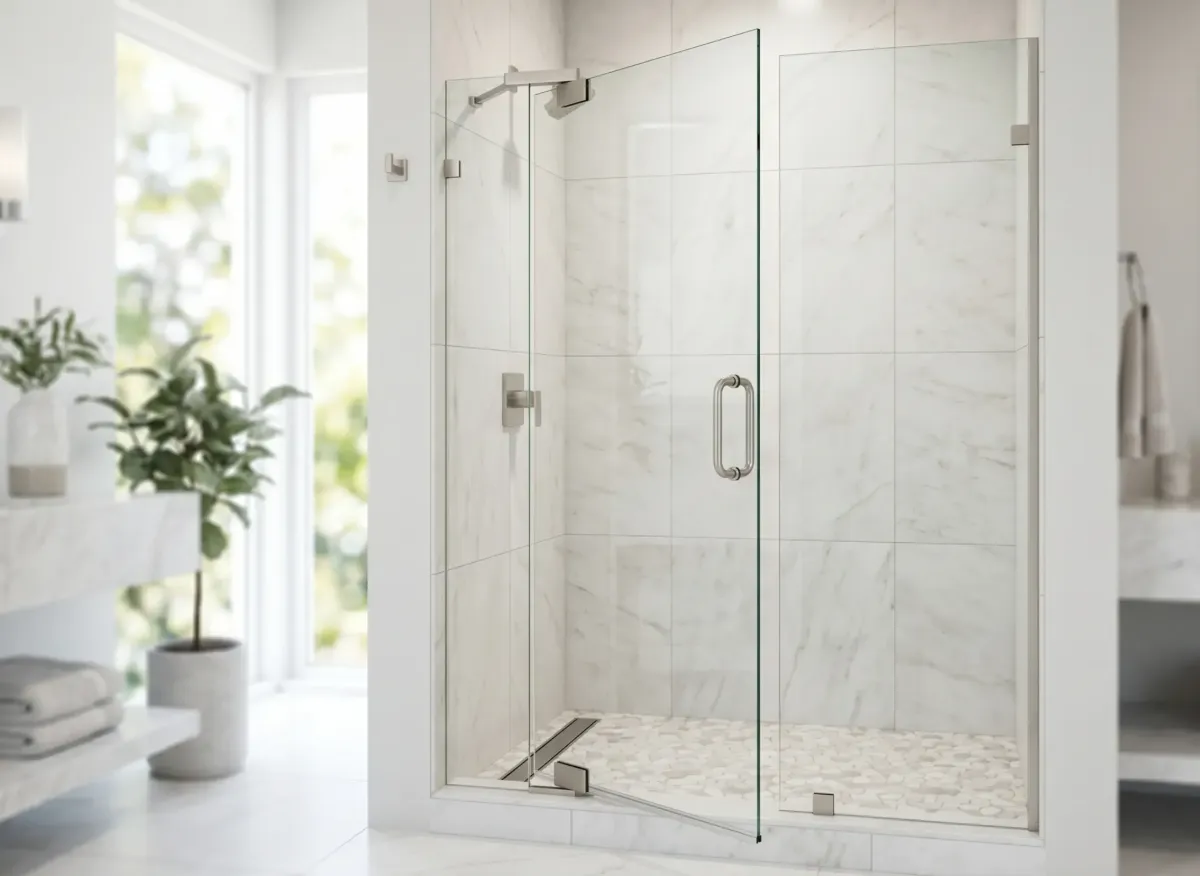
Clear glass is a common option because it allows the bathroom to retain an open appearance. It can make a smaller shower area feel less enclosed and allows decorative tilework to remain visible.
Frosted, textured, or patterned glass can provide more privacy. These options can also introduce a decorative element without requiring curtains or opaque wall panels.
For a steam shower, the glass specification should be suitable for the intended enclosure and meet applicable safety requirements.
Tempered Glass Is a Common Choice
Shower doors are exposed to moisture, temperature changes, and regular opening and closing, so safety is a primary consideration.
Tempered safety glass is widely used for shower enclosures. It is manufactured to provide greater resistance to thermal and mechanical stress than ordinary glass and is designed to break into smaller pieces if it fails.
The appropriate thickness depends on the door dimensions, configuration, hardware, and manufacturer specifications.
For larger or heavier doors, the supporting hardware and wall construction are equally important. Glass should never be treated as an isolated component of the system.
Frameless or Framed?
The choice between framed and frameless construction can significantly affect the appearance of a steam shower.
Frameless Doors
Frameless doors use minimal visible metal framing and typically rely on thicker glass and specialised hinges or brackets.
They create a clean appearance and can showcase tile, stone, and other interior finishes. However, they require accurate installation because the glass and hardware must work together precisely.
Framed Doors
Framed doors use metal profiles around the glass. These profiles can provide additional support and create a more defined enclosure.
A framed system may also provide more opportunities for sealing around the door, depending on the design.
Semi-Frameless Options
Semi-frameless systems combine elements of both approaches. They can reduce the amount of visible framing while retaining structural framing in selected areas.
The best option depends on the enclosure design, available opening, glass specification, and desired appearance.
Door Seals Matter More in a Steam Shower
Seals may be easy to overlook because they are relatively small components, but they can have a major effect on enclosure performance.
A steam shower door needs appropriate sealing around areas where steam could escape. The design may include seals along the door edges and other points where moving and fixed panels meet.
The condition of these seals should also be monitored over time. A damaged or deteriorated seal can reduce the effectiveness of the enclosure and allow more moisture to escape.
Door alignment is equally important. Even a good seal will perform poorly if the door is incorrectly positioned or does not close properly.
Consider the Door Opening
A steam shower door needs to provide practical access without compromising the enclosure.
The available bathroom space will influence whether a hinged door, pivot door, or another configuration is suitable. The door must have enough clearance to operate without hitting nearby fixtures.
The location of benches, controls, shower fittings, and other interior components should also be considered.
Accurate measurements are essential, especially for custom glass. Small variations in wall alignment or opening dimensions can affect how the finished door fits.
Hardware Can Define the Look
Handles and hinges are functional components, but they also contribute to the overall bathroom design.
Popular finishes include polished chrome, brushed metal, matte black, and other options that can be coordinated with faucets, shower controls, lighting fixtures, and bathroom accessories.
For a minimalist bathroom, simple hardware can maintain a clean appearance. In a more traditional space, decorative hardware can complement the existing fittings.
The hardware should also be designed for use in a wet environment and be compatible with the glass thickness and door weight.
Think About the Full Enclosure
Selecting the door in isolation can lead to problems. A steam shower works as a complete enclosure, so the ceiling, walls, fixed panels, door, seals, and ventilation arrangements all need to be considered together.
The enclosure may need a suitable ceiling height and configuration to help retain steam. Wall and ceiling surfaces should also be appropriate for repeated exposure to moisture and temperature changes.
The steam generator, controls, and other equipment should be installed according to the manufacturer’s requirements.
A door cannot compensate for an enclosure that has large openings elsewhere.
Style Does Not Have to Be Sacrificed
A steam shower can be highly functional while still looking like an integral part of the bathroom.
Clear glass can maintain an open visual connection between the shower and the rest of the room. Minimal hardware can support a contemporary aesthetic, while decorative finishes can suit more traditional interiors.
The glass door can also be coordinated with tile patterns, stone surfaces, fixtures, and lighting.
The important point is to make design decisions alongside the technical requirements rather than choosing appearance first and trying to solve performance issues later.
Maintenance and Long-Term Use
Steam showers experience frequent exposure to moisture, so regular maintenance is useful.
Glass should be cleaned to reduce mineral deposits and soap residue. Seals should be checked for deterioration, while hinges and handles should be inspected to make sure they remain secure.
If the door begins to drag, stick, or fail to close properly, the issue should be addressed promptly. Misalignment can affect both usability and enclosure performance.
Following the care instructions provided by the door and hardware manufacturers can help maintain the system over time.
Questions to Ask Before Choosing a Door
Before ordering a shower door for a steam shower, consider:
- What type of enclosure is being built?
- How much clearance is available for the door?
- What glass thickness is appropriate?
- Is clear, frosted, or textured glass preferred?
- Will the door be framed, frameless, or semi-frameless?
- What sealing system is required?
- Where will hinges and handles be positioned?
- Is the surrounding wall structure suitable for the hardware?
- How will the door work with the steam shower’s overall design?
- What maintenance will the seals and hardware require?
Taking accurate measurements and reviewing these details before ordering can prevent expensive modifications later.
Finding the Right Balance
The right shower door for a steam shower needs to do more than look attractive. It should fit accurately, support steam containment, use appropriate safety glass, and work with the enclosure’s walls, ceiling, hardware, and other components.
At the same time, there is plenty of room for personal style. Glass type, framing, hardware finish, and door configuration can all be selected to complement the bathroom.
By treating performance and appearance as parts of the same design process, a steam shower can provide the enclosure it needs without looking out of place in the finished bathroom.