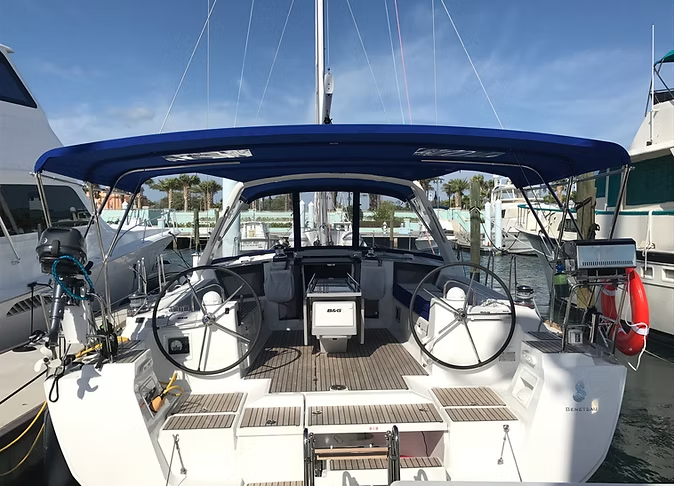
A T-top provides useful protection around the helm, but its coverage often ends before the bow. That leaves forward seating, casting areas, and other sections of the deck exposed to direct sun. Extending shade toward the bow can make the forward part of the boat more comfortable without filling the deck with a permanent frame.
A removable system can be positioned around the existing layout of the boat, using rod holders as mounting points for additional support. This keeps the extension separate from the T-top while allowing it to be removed when full fishing access is required.
For boats that need additional forward coverage, a t top sun shade can extend shade beyond the existing hardtop while keeping the bow usable.
What Does a T Top Sun Shade Cover?
A T-top normally creates a shaded zone around the helm and console. Its size and position determine how much protection reaches toward the bow or stern. On many center console boats, the forward deck extends well beyond this covered area.
Additional shade can bridge that gap without requiring a larger permanent T-top. The extension needs to be positioned according to the boat’s deck arrangement, rod holders, and desired coverage.
The Area Protected by the Existing T-Top
The T-top generally protects the console and the people operating or sitting around it. The framework and roof provide overhead coverage but may not extend far enough to cover forward seating or the bow casting area.
This leaves an opportunity to add a separate shade panel that connects to the existing structure while receiving additional support farther forward.
Why the Bow Can Remain Exposed
Center console boats are designed with an open forward deck. This provides space for casting, seating, anchoring, and movement around the boat.
A T-top cannot cover the entire deck without becoming considerably larger and potentially restricting the open layout. A removable extension offers another way to provide coverage without changing the basic structure of the boat.
When Additional Shade Becomes Useful
Extra shade is useful when passengers spend time in the bow or when the forward deck needs protection during extended periods on the water. It can also create a shaded area without requiring passengers to remain around the console.
The size of the extension should match the actual area that needs coverage rather than simply extending as far forward as possible.
What Is a T Top Bow Shade Extension?
A T-top bow shade extension is an additional fabric panel supported between the existing T-top and separate shade poles. The T-top provides one side of the support arrangement, while removable poles positioned farther forward create the additional structure.
This arrangement can extend the shaded area while preserving access to the boat’s existing fishing and walking spaces.
How an Extension Expands Existing Coverage
The extension begins at or near the T-top and stretches toward the bow. Its forward edge is supported by poles positioned at suitable rod holders.
The fabric is tensioned between these points so it remains above the deck instead of resting against the T-top or other equipment. The result is a larger shaded area without replacing the existing top.
Using Rod Holders for Additional Support
Existing rod holders can provide convenient mounting points for removable shade poles. Compatible poles fit into the holders and provide the forward supports needed for the extension.
This approach avoids creating separate bases on the deck. The available rod holder positions should be assessed first because they determine where the forward poles can be placed.
Keeping the Bow Open for Fishing and Movement
The extension should provide shade without turning the bow into a restricted area. Pole locations need to remain clear of common casting paths, seating positions, storage access, and walkways.
The fabric should also sit at a suitable height so rods can be moved without repeatedly contacting the canopy.
How Should You Position a T Top Sun Shade?
Positioning determines how useful the extension will be. A large shade panel can still perform poorly if its supports occupy the wrong areas or if the fabric blocks access to important equipment.
Start by identifying the area that needs shade, then work backward to determine suitable pole positions and fabric dimensions.
Determining the Desired Coverage Area
Measure the forward section that needs protection from direct sunlight. Consider whether the shade is intended to cover seating, part of the casting deck, or a combination of both.
A smaller panel positioned accurately can be more practical than an oversized panel that extends into areas where shade is not required.
Maintaining Clear Sightlines
The shade should not obstruct the operator’s view from the console. The fabric and support poles need to remain outside important sightlines, particularly when the boat is underway.
The panel should also be positioned so passengers can move beneath it without creating an enclosed or visually restrictive space.
Avoiding Interference With Rods and Equipment
Rod tips, reels, outriggers, anchor equipment, and other deck hardware need adequate clearance. This is particularly important on a fishing boat where equipment may be moved quickly around the bow.
The support poles should be placed in rod holders that are suitable for shade use without taking away holders needed for active fishing.
Managing Shade Fabric Tension
Tension keeps the fabric positioned correctly and reduces unnecessary movement. A suitable tensioning system allows the panel to be tightened and released without complicated rigging.
Marine shade systems using a 316 stainless steel duo cam cleat and pulley arrangement can provide controlled tension while keeping the hardware relatively compact.
What Makes a Removable T Top Shade Practical?
A removable extension is useful because a center console does not perform the same function throughout every part of a trip. Shade may be desirable during cruising or resting, while a completely open bow may be preferable during active fishing.
A system that can be installed and removed without permanent modifications gives the owner more control over the deck arrangement.
No Permanent Drilling
Rod holder-mounted shade poles can use existing 1.5-inch rod holders instead of requiring new mounting holes. This keeps the additional shade hardware separate from the boat’s permanent structure.
The approach is especially suitable for owners who want forward shade without committing to a fixed bow frame.
Quick Setup and Removal
A fixed-length pole system can be installed by securing the shade fabric, routing the tensioning line through the upper fitting, inserting the pole into the rod holder, and tightening the line.
The same components can be removed in reverse when the shade is no longer required. The manufacturer’s system is designed for installation in minutes and subsequent deployment in under a minute.
Easy Storage Between Trips
A removable shade system should have a practical storage method. Poles can be taken off the boat and stored with the fabric rather than remaining exposed on deck.
WeatherMAX marine storage bags are available for protecting the poles and keeping the components together between uses.
Flexible Coverage for Different Activities
The same boat may need different shade arrangements depending on the activity. A forward extension can be used for passenger comfort and then removed when the bow needs to remain completely open.
This flexibility is one of the main reasons removable poles can work well with center console layouts.
Should You Choose Carbon Fiber or Aluminum Shade Poles?
Pole material affects handling, rigidity, appearance, and cost. Both carbon fiber and aluminum configurations are available for marine shade applications, with fixed 6-foot and 8-foot pairs designed for different vessel requirements.
The best material depends on the boat and how often the system will be installed, removed, and stored.
Weight and Handling
Carbon fiber provides a high strength-to-weight ratio, which can make longer poles easier to carry and position. This is useful when the shade is removed after fishing or stored between trips.
Aluminum remains a practical option where a lower material cost is more important than minimizing weight.
Rigidity and Stability
Shade fabric needs support that can resist bending while tension is applied. A rigid pole helps maintain the intended shape of the shade panel.
Carbon fiber is known for its stiffness and low weight. Proper pole length and mounting position remain important regardless of the selected material.
Saltwater Considerations
Marine shade hardware is exposed to salt spray, moisture, and sunlight. The fittings should therefore be selected for marine conditions.
The carbon fiber configurations use anodized aluminum fittings and 316 stainless steel hardware, while powder-coated options provide another finish choice.
Matching the Pole to Your Boat
Pole length should be based on the distance between the T-top and the forward mounting points, the desired shade height, and the dimensions of the fabric.
For many center console applications, 6-foot pairs are the standard configuration, while 8-foot poles are used for larger vessels and greater coverage requirements.
For specifications and available configurations, Sunfly Poles provides information on carbon fiber and aluminum shade systems, fixed pole lengths, fittings, and marine applications.
How Do You Maintain a T Top Shade System?
A removable shade system is exposed to the same marine conditions as other equipment on the boat. Salt, UV exposure, moisture, and repeated installation can affect fabric, lines, fittings, and mounting components.
Simple maintenance after use can help keep the system ready for the next trip.
Inspecting Poles and Fittings
Check the poles for visible damage and inspect the fittings for looseness, wear, or other signs of deterioration. Pay particular attention to the areas where the poles connect to the rod holders and where the fabric tension is transferred.
Any damaged component should be addressed before the system is used again.
Cleaning After Saltwater Use
Rinse the poles, fittings, and other suitable components with fresh water after saltwater exposure. This helps remove salt residue before it accumulates around moving or connected parts.
The shade fabric should be cleaned according to its specific care instructions rather than subjected to aggressive cleaning methods.
Checking Lines and Cleats
The tensioning line should run cleanly through the pulley and remain secure in the cam cleat. Check for fraying or wear before installation.
A clean, functioning cleat makes it easier to achieve consistent fabric tension and release the shade after use.
Storing the System Properly
Remove the poles when they are not required and store them away from unnecessary impact or abrasion. Keep the fabric dry and protected from prolonged sunlight when stored.
A dedicated marine storage bag can help prevent the poles from becoming scratched while also keeping the shade components organized.
Frequently Asked Questions About T Top Sun Shades
Can I add shade to the bow of a T-top boat?
Yes. A removable shade panel can extend forward from the existing T-top when suitable mounting points are available. Rod holder shade poles can provide the additional forward support needed for the extension.
Can a T-top sun shade be removed easily?
A removable rod holder system can be taken down after use by releasing the tensioning line and removing the poles from their rod holders. The fabric and poles can then be stored until additional coverage is required.
Will a bow shade interfere with fishing?
It does not have to. Proper positioning can keep poles and fabric away from casting paths, rod tips, and frequently used equipment. The mounting locations should be selected before choosing the fabric dimensions.
Do I need to drill into my boat to add shade?
Not necessarily. A compatible rod holder shade system can use existing standard 1.5-inch rod holders as mounting points, eliminating the need to drill separate bases for the shade poles.
What type of poles work with a T-top shade?
Fixed-length carbon fiber or aluminum poles can be used for suitable T-top shade configurations. Six-foot pairs are commonly used for center console applications, while longer poles may suit larger boats or greater coverage requirements.
Final Thaughts
Extending shade over the bow of a center console does not require replacing the existing T-top or filling the forward deck with permanent hardware. A separate fabric panel supported by removable poles can add coverage while preserving the open layout needed for fishing and movement.
The most suitable setup depends on the required coverage, rod holder locations, pole length, fabric tension, and desired clearance. Carbon fiber can reduce handling weight, while aluminum provides another practical material option. Marine-grade fittings and proper maintenance also matter because the system operates in an environment exposed to saltwater, UV, and changing weather.
A removable approach gives the boat greater flexibility. Shade can be deployed when forward coverage is useful and removed when an unrestricted bow is needed. For help selecting the appropriate configuration, visit the contact page.