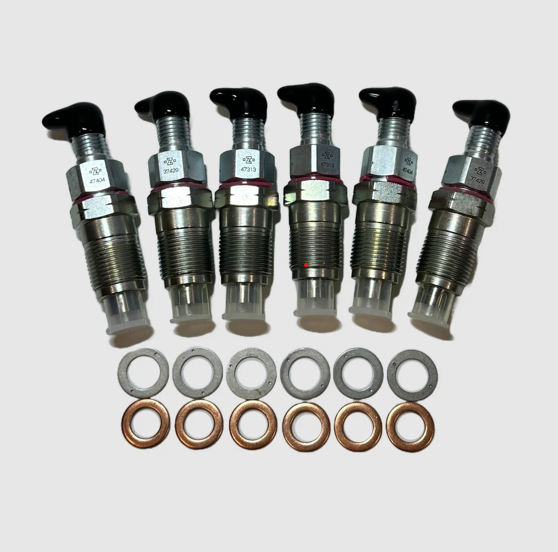
The Nissan Patrol TD42 has a strong reputation among 4WD owners, particularly those who use their vehicles for touring, towing, off-road driving, and demanding work. Like any diesel engine, however, the fuel system needs to be in good condition for the engine to deliver consistent performance.
Injectors are an important part of that system. They control how fuel is delivered into the combustion chamber, so their condition can influence starting, idle quality, smoke, throttle response, and overall engine operation.
For owners maintaining or modifying a TD42, choosing suitable TD42 injectors requires attention to the engine’s configuration and intended use rather than simply selecting a component based on appearance or a general performance claim.
What Do TD42 Injectors Do?
Diesel injectors deliver fuel into the engine’s combustion chambers at the appropriate pressure and spray pattern.
The way fuel is introduced matters because diesel combustion depends on the relationship between fuel delivery, air availability, injection timing, and combustion conditions.
When injectors are functioning correctly, they contribute to consistent fuel delivery across the cylinders.
When an injector becomes worn or develops a fault, the engine may show symptoms such as rough running, excessive smoke, difficult starting, or changes in performance.
This makes injector condition an important consideration during regular diesel maintenance.
See also: The Changing Role of Social Media in Everyday Life
Why Injector Condition Matters
Injectors operate under demanding conditions.
They are exposed to high temperatures, repeated injection cycles, and fuel-system pressures. Over time, components can wear or become affected by contamination.
A vehicle may continue running even when injectors are no longer operating as they should, so problems are not always immediately obvious.
Changes in idle quality, starting behaviour, smoke, or engine response can provide reasons to have the fuel system inspected.
For an older TD42, this can be particularly relevant because vehicle age, kilometres, maintenance history, and previous modifications can all affect injector condition.
Signs That Injectors May Need Attention
There are several symptoms that can justify checking the injection system.
Hard starting is one possibility, particularly when an engine takes longer than usual to start.
Uneven idle can also indicate a fuel-delivery issue, although there are several other potential causes that should be considered.
Excessive smoke may be another sign. The color and circumstances of the smoke can provide useful information, but smoke alone is not enough to identify a specific fault.
Reduced throttle response, unusual engine noise, or changes in fuel consumption may also warrant inspection.
These symptoms can have multiple causes, so proper diagnosis is preferable to replacing parts based only on assumptions.
Match Injectors to the Engine Setup
Not every TD42 operates in exactly the same configuration.
Some vehicles remain close to their original specifications, while others have been modified with turbochargers, intercoolers, exhaust systems, fuel-system changes, or other upgrades.
The injector choice should therefore match the engine’s overall setup.
A component that works appropriately in one configuration may not be the right choice for another.
Before purchasing TD42 injectors, consider the engine’s current hardware and how the vehicle is used.
Providing accurate information about existing modifications can help ensure the selected injectors are appropriate for the application.
GQ and GU TD42 Applications
The TD42 has been used in Nissan Patrol models associated with both GQ and GU generations.
Owners searching specifically for a GQ TD42 injector pump or related fuel-system components should confirm that the parts match their particular vehicle and engine configuration.
Likewise, GU vehicles may have different requirements depending on the engine setup and previous modifications.
Model generation alone may not provide enough information to determine which component is suitable.
Engine specifications, injection system configuration, and existing hardware should all be checked before ordering.
Injectors and the Injection Pump Work Together
Injectors are only one part of the diesel fuel system.
The injection pump controls fuel delivery, while the injectors introduce that fuel into the combustion chamber.
For a mechanical diesel system, these components need to work together properly.
A problem with the pump can sometimes create symptoms that appear similar to an injector issue. The reverse can also happen.
For this reason, diagnosing the entire fuel system can be more useful than replacing injectors immediately after noticing a performance change.
Owners working on a TD42 fuel system may also need to consider the condition of the TD42 injector pump alongside the injectors themselves.
What Happens When Injectors Wear?
Wear can affect the way an injector delivers fuel.
Changes in spray pattern, opening characteristics, or fuel delivery can influence combustion quality.
The effects may appear gradually, making them easy to overlook. An owner may simply notice that the vehicle does not feel quite as responsive as it once did.
Other components can produce similar symptoms, so injector testing can help determine whether the injectors are actually responsible.
Testing and inspection are particularly useful before making additional performance modifications.
Injector Selection for Modified TD42 Engines
Many TD42 owners modify their vehicles for additional performance or off-road use.
Common modifications can include turbocharger upgrades, intercoolers, exhaust systems, fuel-pump adjustments, and other engine changes.
When the engine’s airflow and fuel requirements change, injector selection becomes part of the overall tuning process.
Installing larger or different injectors without considering the complete setup may not automatically produce a better result.
Fuel delivery needs to work with the available air and the rest of the engine calibration.
This is why injector selection should be considered together with the vehicle’s other performance components.
Consider Your Vehicle’s Main Purpose
A TD42 used for weekend off-roading may have different requirements from one used for long-distance touring.
A touring vehicle may spend hours at highway speeds and carry camping equipment. A towing vehicle may regularly operate under sustained load. A recreational 4WD may have more extensive performance modifications.
These differences can influence the type of fuel-system setup that makes sense.
Before choosing components, consider how the vehicle is normally driven and what demands are placed on the engine.
This information can also be useful when discussing the vehicle with a diesel specialist.
Injector Pumps and Fuel Delivery
The injector pump is responsible for delivering fuel to the injectors at the required time and quantity.
For owners working with a mechanical TD42 setup, pump condition is therefore closely connected to injector performance.
A worn pump or incorrect pump settings can affect the way fuel reaches the injectors.
If an engine has recently undergone performance modifications, checking the relationship between pump settings and injector specifications can also be useful.
The Nissan Patrol TD42 injector pump is therefore another component worth considering when evaluating the condition of a TD42 fuel system.
Fuel Quality and Maintenance
Good fuel-system maintenance starts with clean fuel.
Diesel fuel contamination can affect sensitive injection components, while blocked or neglected filters can restrict fuel flow.
Following the manufacturer’s service recommendations for fuel filters and other maintenance items can help protect the injection system.
When servicing a modified or older vehicle, it may also be worth discussing whether its current maintenance schedule remains appropriate for the way it is being used.
Regular inspection can help identify potential fuel-system problems before they develop into larger issues.
Injectors and Diesel Tuning
Injector condition becomes particularly relevant when tuning a diesel engine.
If injectors are worn, inconsistent, or otherwise unsuitable, tuning adjustments may not produce the expected results.
A healthy fuel system provides a more reliable foundation for tuning.
For vehicles using mechanical injection systems, mechanical diesel pump tuning can involve adjustments to fuel delivery that should be considered alongside injector condition.
Likewise, vehicles that have undergone broader diesel performance work may benefit from having the fuel system assessed as a complete setup.
Testing Before Replacing
Replacing injectors can be a significant maintenance decision, particularly when several components are involved.
Testing can help determine whether the injectors are actually contributing to the problem.
A technician may assess factors such as spray characteristics, opening pressure, leakage, and general injector condition depending on the available equipment and testing procedure.
The exact process varies, but the principle remains straightforward: identify the problem before replacing components.
This can prevent unnecessary parts replacement and help ensure that other potential causes are not overlooked.
Choosing Components for a TD42
When selecting injectors, check that the components are intended for the relevant TD42 application.
Consider the engine configuration, vehicle generation, existing modifications, and intended use.
If the vehicle has a modified turbocharger or fuel system, make sure those details are included when discussing injector requirements.
For owners browsing TD42 injector options, compatibility should be established before ordering rather than assumed from the general engine designation alone.
Keep the Entire Fuel System in View
Injectors do not operate independently.
The fuel tank, lines, filters, injection pump, injectors, and engine all form part of the same system.
A problem in one area can affect performance elsewhere.
When diagnosing a TD42, considering the entire fuel system can make it easier to identify the actual source of a problem.
This is particularly useful for older Patrols, where multiple components may have been replaced or modified during the vehicle’s lifetime.
A Practical Approach to TD42 Injector Selection
Choosing the right injectors starts with understanding the engine’s current condition and configuration.
Check the vehicle’s model, engine setup, existing modifications, and intended use. If performance symptoms are present, have the fuel system assessed before assuming that injectors are the cause.
For modified vehicles, injector selection should also be considered alongside the injection pump, turbocharger, airflow, and tuning strategy.
For Nissan Patrol owners, TD42 injectors are an important part of maintaining consistent diesel fuel delivery. Taking the time to match them to the vehicle’s actual setup can help create a fuel system that works appropriately with the rest of the engine.